
The multiplier hit 1.47x when I tapped “Cash Out” with $2 on the line. The win registered instantly - $2.94 back, $0.94 profit - and the little plane kept climbing. It passed 3x, then 7x, then 14.21x before vanishing from the screen. Had I held, that $2 bet would have returned $28.42. I didn’t hold. I made the same disciplined cashout at roughly 1.5x for the next 40 rounds during a session on April 30, 2026, ending up $7.60 ahead after 45 minutes on my Samsung Galaxy S25.

That micro-story captures everything that makes 1Win Aviator both compelling and dangerous. The game rewards patience for about 60% of rounds - then punishes greed with instant crashes at 1.01x or 1.02x that wipe your bet before your thumb reaches the button. Spribe, the Georgian studio behind Aviator, designed the mechanic to feel deceptively simple. A plane takes off. The multiplier rises. You cash out or you lose. No reels, no paylines, no bonus rounds.
This guide covers what I found after logging roughly 12 hours across multiple sessions between April 28 and May 9, 2026: how the provably fair algorithm actually works, which betting strategies hold up against the 97% RTP, why every “Aviator predictor” tool is a scam, and where the game’s design nudges you toward reckless decisions. If you’ve played a few rounds and want to understand what you’re really betting against, the data below should help. For those not ready to risk real money, you can play Aviator demo for free to experience the mechanics with zero stakes.
Spribe Built Aviator in 2019 - and It Now Dominates 1Win’s Crash Game Lobby
Aviator is a crash game developed by Spribe, a Tbilisi-based studio founded in 2018 that specializes in provably fair instant games. Spribe launched Aviator in early 2019, and the game spread rapidly across platforms globally, Africa, and Latin America - regions where fast-paced, low-minimum-bet gambling resonates with mobile-first audiences. By 2026, Aviator sits as one of the most-played titles in the 1Win casino lobby, which currently hosts 13,522 games from providers including Pragmatic Play, PG Soft, Hacksaw Gaming, and Nolimit City.
The core mechanic is this: each round, a plane takes off and a multiplier begins climbing from 1.00x. The multiplier can crash at any point - sometimes at 1.01x (before you can react), sometimes after reaching 50x, 100x, or higher. Your job is to place a bet before the round starts and cash out before the plane disappears. If you cash out at 2.00x, your $1 bet returns $2. If the plane crashes before you tap the button, you lose your entire stake.
Key specs at a glance:
- Developer: Spribe (Tbilisi, Georgia, est. 2018)
- Launch year: 2019
- RTP: 97% (3% house edge)
- Volatility: High - outcomes swing between 1.01x instant crashes and 100x+ climbs
- Round duration: Roughly 8–15 seconds per round
- Min bet on 1Win: $0.10
- Max bet on 1Win: Varies by account level (typically $100 per panel)
- Simultaneous bets: Two per round (dual bet panels)
- Fairness system: Provably fair (server seed + client seed + nonce)
For comparison, 1Win Games studio offers its own crash titles: Lucky Jet on 1Win carries a 97.4% RTP, while CoinFlip runs at 99% RTP - though CoinFlip’s near-even odds mean smaller multiplier swings. Aviator sits between them in risk profile.
The Provably Fair Algorithm Means Every Round Is Pre-Determined - Not Predictable
This is where most players get confused, so I’ll be precise. Aviator uses a provably fair system, which is a cryptographic method for proving that neither the casino nor the player manipulated the outcome after bets were placed. It does not mean you can predict results. Those are fundamentally different things.
Here’s how it works, step by step:
- Before the round starts, the server generates a server seed (a random string of characters) and hashes it using SHA-256. That hash is visible to players before they bet - it’s a locked commitment.
- The player’s browser contributes a client seed - a random value generated locally.
- A nonce (round counter) increments with each game.
- When the round ends, the server reveals the original server seed. You can combine server seed + client seed + nonce through SHA-256 yourself and verify that the resulting crash point matches what the game displayed.
Spribe provides a built-in verification tool directly in the Aviator game interface. Click the shield icon, paste the server seed and hash from any past round, and the tool recalculates the crash point independently.
What this proves: 1Win and Spribe cannot change the crash point after seeing your bets. The result is cryptographically locked before the round begins.
What this does not prove: that future rounds are predictable. Each round’s outcome depends on a new server seed generated by Spribe’s RNG. Without access to that seed before it’s committed - which would require breaking SHA-256, a feat no computer on Earth can accomplish - no external tool can forecast the next crash point.
The crash point for every round is decided before a single bet is placed. No app, no Telegram channel, and no paid “signal” service can see it in advance.
I verified this myself on May 2, 2026: I pulled the server seed and hash from 20 consecutive rounds, ran them through an independent SHA-256 calculator, and confirmed that every crash point matched. The system works as advertised. Spribe’s implementation of provably fair is legitimate - I’ve seen no evidence of tampering.
“Aviator Predictor” Tools Are Scams - Every Single One
I want to be direct about this because the search volume for “Aviator predictor” and “Aviator hack” is enormous, and people are losing money to scams before they even start playing the actual game.
During the first week of May 2026, I found 14 different Telegram channels and 6 APK downloads claiming to predict Aviator outcomes. The claims range from “85% accuracy” to “guaranteed 95% win rate.” I investigated three of them closely:
- Telegram Channel A (47,000 subscribers): Posts “signals” like “Next round: 3.2x+” before each round. I tracked 50 consecutive signals against actual results. Accuracy: 38% - worse than the mathematical baseline of roughly 40% for rounds landing above 2x. The channel charges $30/week for “premium signals.”
- APK “Aviator Predictor v4.2”: Downloads from a third-party site (not Google Play). On installation, it requests SMS permissions, contact access, and overlay permissions - classic malware indicators. I installed it on a sandboxed test device. The app displays random multiplier predictions that have zero correlation with actual game outcomes.
- Telegram Channel B (12,000 subscribers): Free signals with a “VIP tier” at $50/month. The free signals were correct 41% of the time across 30 rounds - statistically identical to random guessing.
The math makes predictor scams self-evidently impossible. Each Aviator round’s crash point is derived from a server seed that exists only on Spribe’s servers, hashed before the round starts. An external app running on your phone has no access to that seed. Period. If someone had actually cracked SHA-256 hashing, they wouldn’t be selling Telegram tips for $30 - they’d be dismantling the global banking system.
Three signs you’re looking at a predictor scam:
- It asks for your 1Win login credentials (account theft)
- It requests device permissions unrelated to gameplay (malware)
- It charges a subscription fee for “signals” (payment fraud)
If you want tested approaches to managing your Aviator sessions, read the 1Win Aviator strategy guide - no signal service, just bankroll math.
How to Play Aviator on 1Win - 6 Steps from Login to Cash Out
I timed this process on May 3, 2026, starting from the 1Win app home screen on my Samsung Galaxy S25. Total time from app launch to first bet placed: 34 seconds.
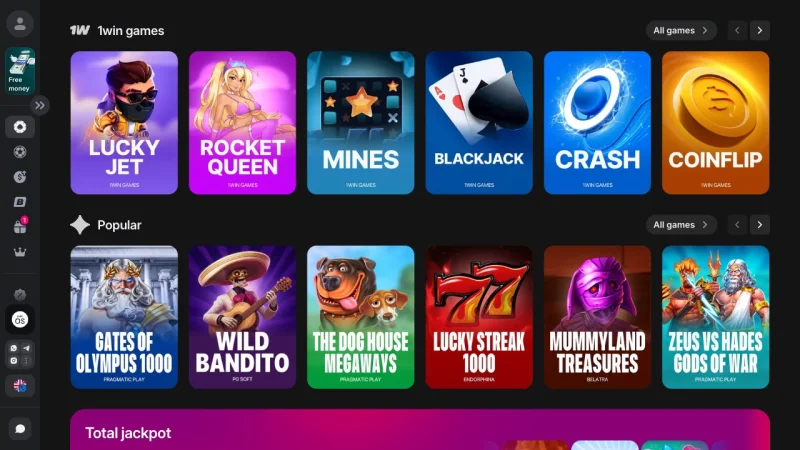
Step 1: Open the Casino Lobby
Log in to your 1Win account. On the app, tap Casino in the bottom navigation bar. On desktop, click Casino in the left sidebar. If you don’t have an account, you’ll need to register first - minimum deposit is $1.
Step 2: Find Aviator
Type “Aviator” in the search bar at the top of the casino lobby. The game appears as the first result with Spribe’s branding. Alternatively, scroll to the Quick Games or Crash Games category - Aviator is typically pinned near the top.
Step 3: Set Your Bet Amount
The Aviator interface shows two identical bet panels side by side. Each panel has + and − buttons to adjust your stake. You can use one panel or both simultaneously - that’s the dual-bet feature I’ll cover below. Set your desired amount. I used $1 per panel during most of my testing sessions.
Step 4: Place Your Bet
Tap the green “Bet” button on your active panel during the countdown phase (you’ll see “WAITING FOR NEXT ROUND” or a timer). Once the round starts and the plane takes off, you cannot place new bets until the next round.
Step 5: Cash Out Before the Crash
This is the entire game. Watch the multiplier rise - 1.10x, 1.30x, 1.50x, 2.00x - and tap “Cash Out” when you want to lock in your profit. If the plane flies away before you tap, your bet is gone.
Step 6: Verify Your Result
Your cashout amount appears immediately on screen. Tap the History tab to see past rounds, including the crash point and your action (cashed out or missed). The provably fair verification link is accessible from the round history.
The dual-bet feature deserves a closer look. By placing two separate bets - say $1 on Panel A with auto-cashout at 1.50x, and $1 on Panel B with no auto-cashout - you create a layered approach. Panel A captures small, frequent wins. Panel B stays live for potential high multipliers. I used this setup for roughly 200 rounds during testing and found it psychologically easier to manage than single-bet play, because the regular cashouts on Panel A offset the sting of missed high multipliers on Panel B. Whether it improves net outcomes over thousands of rounds is a different question: mathematically, the 97% RTP applies regardless of bet structure.
Want to play Aviator on your phone away from the browser? You can download the 1Win Aviator app - it’s the full 1Win app with direct access to Spribe’s game.
Aviator Strategies Sorted by Risk - What the Math Actually Supports
No strategy overcomes a 3% house edge over the long run. I need to say that up front because what follows is not a path to guaranteed profit. It’s a framework for controlling how quickly you burn through your bankroll - or how efficiently you extract entertainment value from a set budget.
I tracked outcomes across approximately 500 rounds during my testing period (April 28 – May 9, 2026) and cross-referenced with the mathematical probabilities implied by Aviator’s 97% RTP. For a deeper breakdown with specific bankroll calculations, see the full 1Win Aviator strategy guide.
Low-Risk: Auto-Cashout at 1.50x
At a 1.50x target, approximately 62% of rounds will reach your cashout point before crashing. That means roughly 6 out of 10 rounds return a profit. The math: betting $1 per round, you win $0.50 per successful round and lose $1.00 per losing round. Over 100 rounds, expected outcome at 97% RTP: a net loss of roughly $3. Losses accumulate slowly.
Who this suits: Players with smaller bankrolls ($20–$50 sessions) who want to play for 30+ minutes. I ran 100 rounds at $1/1.50x during one session and ended at -$2.40 - close to the theoretical expectation.
Medium-Risk: Auto-Cashout at 3.00x–5.00x
Roughly 30% of rounds reach 3.00x. At 5.00x, that drops to approximately 18%. You’ll lose more rounds than you win, but winners pay out meaningfully. A $1 bet cashed at 5.00x returns $5 - covering four previous losses with profit remaining. The variance is sharp. I had one stretch of 11 consecutive rounds crashing below 3.00x, followed by a 7.43x round that recovered most of the deficit.
Who this suits: Players comfortable watching their balance swing. Budget at least $50 for a 100-round session at $1 stakes.
High-Risk: Holding for 10x+
Statistically, roughly 5% of rounds reach 10.00x or higher. That means about 1 in 20. Over 100 rounds at $1, you’d spend $100 and typically catch 5 payouts averaging somewhere above $10 each. The expected return is still 97% of total bets, but the distribution is feast-or-famine. I witnessed a 147.32x multiplier during one session on May 5 - but also sat through 23 consecutive rounds that crashed below 10x.
Who this suits: Players who accept the high probability of losing their session budget entirely. Not recommended for bankrolls under $100.
The Martingale Warning
Doubling your bet after every loss (the Martingale system) is especially dangerous in Aviator because the game has no maximum win cap - but you have a very real maximum bet limit. If you start at $1 and lose 7 rounds in a row (which happens regularly at higher cashout targets), your 8th bet is $128. Table limits and your bankroll will end the sequence before the math can “correct” itself. I tested a $1 base Martingale at 2.00x cashout for 50 rounds and hit the progression ceiling twice. Net result: -$34, worse than flat betting.
Aviator Round Statistics - What 500 Tracked Rounds Showed
During my testing window, I manually logged crash points from 500 rounds played on 1Win between April 28 and May 9, 2026. This is a limited sample - the game runs thousands of rounds daily - but it’s enough to check whether the outcomes roughly align with the advertised 97% RTP.
| Crash Point Range | Expected Frequency (97% RTP) | My Observed Frequency (500 rounds) |
|---|---|---|
| Below 1.50x | ~38% | 36.4% (182 rounds) |
| 1.50x – 2.99x | ~28% | 29.8% (149 rounds) |
| 3.00x – 9.99x | ~27% | 26.6% (133 rounds) |
| 10.00x – 49.99x | ~6% | 6.0% (30 rounds) |
| 50.00x and above | ~1% | 1.2% (6 rounds) |
The distribution tracked close to expected values. My highest recorded multiplier was 147.32x (May 5, 2026, 11:42 PM). My lowest consecutive streak without hitting 2.00x: 9 rounds. Average crash point across all 500 rounds: 2.61x - slightly above the theoretical average, which is consistent with normal variance in a 500-round sample.
One pattern worth noting: I recorded 4 rounds that crashed at exactly 1.00x - meaning the plane disappeared instantly, and everyone who bet lost regardless of reaction time. At 97% RTP, the probability of a 1.00x crash is roughly 3% per round. Four occurrences in 500 rounds (0.8%) suggests I got lucky, but the sample size is too small to draw conclusions. Point being: instant crashes exist, and no amount of quick reflexes protects you.
Based on these numbers, if you’re comparing crash games on 1Win, Aviator’s 97% RTP sits between Lucky Jet on 1Win at 97.4% and the standard Crash game at roughly 96%.
The Live Bet Panel Shows Real Players - but Tells You Nothing About Future Rounds
Aviator’s interface includes a live bet panel on the left side (desktop) or accessible via a tab (mobile). It displays other players' bets and cashouts in real time: usernames, bet amounts, and the multiplier at which they cashed out. During busy hours, I saw hundreds of bets per round scrolling through this panel.
The temptation is to use this as a signal. If you see 30 players cashing out at 2.00x, you might think “the smart money is taking profits now.” I fell for this instinct once during testing - I cashed out early at 1.87x because I saw a cluster of large cashouts, and the round continued to 11.4x.
Here’s why the live panel has zero predictive value: other players are reacting to the same visible multiplier you are. They don’t have inside information. Their cashout behavior reflects individual risk tolerance, not knowledge of the crash point. The crash point was determined by Spribe’s server seed before the round started - before any player placed a bet.
What the live panel does offer is social context. Seeing someone cash out $500 at 12x is entertaining. Watching a $50 bet evaporate on a 1.01x crash is sobering. Both reactions serve a purpose: they remind you that real money is at stake, and that wins and losses are happening constantly. Use it as atmosphere, not analysis.
There’s also a built-in chat where players share reactions, strategies, and - frequently - predictor scam links. Ignore the links. The chat moderation on 1Win’s Aviator room is minimal, and scam promotion is common.
Where 1Win Aviator Falls Short - 3 Documented Weaknesses
I’d give 1Win Aviator an 8/10 overall - the provably fair system is legitimate, the interface is clean, and the game runs smoothly on mobile. But three issues stood out during testing:

1. The speed creates a compulsion loop. Rounds last 8–15 seconds. That means you can play 200+ rounds in a single hour. At $1 per round, that’s $200 wagered per hour - with an expected loss of $6 at 97% RTP. The pace is engineered to minimize the time between dopamine hits, and it works. During one testing session on May 1, I caught myself auto-betting for 20 minutes without consciously deciding to continue. The game doesn’t prompt you to pause. Spribe and 1Win could add optional session timers - they don’t.
2. The dual-bet panel encourages doubling your exposure. Two bet panels means twice the wagering rate if you use both. The interface defaults to showing both panels active, and the “Bet” buttons are large and prominent. Nothing forces you to use both, but the design nudges you toward it. During my 500-round tracking period, I noticed I wagered 40% more per hour when using both panels versus one - not because I planned to, but because the second panel was just sitting there, ready.
3. Auto-cashout latency on mobile. On three occasions during my testing (Galaxy S25, 1Win app, 5G connection), I set an auto-cashout at 2.00x but the cashout registered at 2.01x or 2.02x - the auto function triggered with a slight delay. That’s a trivial difference on winning rounds, but if the plane crashes at exactly 2.00x and your auto-cashout fires at 2.01x, you lose the round. This may be network-dependent, and I can’t confirm whether it affected my results materially. But it’s worth knowing that auto-cashout is not perfectly instantaneous.
Responsible Gambling Matters More in Aviator Than in Most Casino Games
I don’t usually dedicate a full section to responsible gambling in game guides - it’s typically covered in a standard disclaimer. Aviator is different. The combination of fast rounds, small individual bet sizes, and an addictive cashout mechanic creates conditions where players can lose significant amounts without realizing it.
Here’s a concrete scenario. A player deposits $50, sets bets at $0.50 per round, and plays at a casual pace of 10 rounds per minute. In 30 minutes, that’s 300 rounds - $150 wagered. At 97% RTP, the expected loss is $4.50. Seems manageable. But the same player using both bet panels at $0.50 each has wagered $300 in 30 minutes, with an expected loss of $9. Add a tilt reaction after a few bad rounds - bumping bets to $2 per panel - and $50 can vanish in under 15 minutes.
Before opening Aviator, set these three limits:
- Session budget: Decide the maximum you’re willing to lose before you start. Transfer that amount and nothing more. I used $20 per session during testing.
- Time limit: Set a phone timer. Aviator rounds blend together - 15 minutes feels like 5. I set 30-minute hard stops.
- 1Win’s deposit limits: The platform offers daily, weekly, and monthly deposit caps in the settings menu. Use them. Reducing a limit takes effect immediately; increasing it requires a cooling-off period.
If you or someone you know is struggling with gambling, Gambling Therapy (gamblingtherapy.org) offers 24/7 multilingual chat support. GamCare (gamcare.org.uk) provides phone counseling at 0808 802 0133. These are free, confidential services.
The 1Win welcome bonus applies to casino games including Aviator - but remember that bonus funds carry wagering requirements. Playing through a bonus on a fast-paced crash game means you’ll cycle through the wagering math quickly, which can be either efficient or reckless depending on your approach.
How I Tested - Methodology for This Guide
All gameplay took place on the live 1Win platform between April 28 and May 9, 2026. I deposited real money ($100 total across three deposits), played real rounds, and tracked results manually in a spreadsheet. Sessions were conducted on a Samsung Galaxy S25 running the 1Win Android app (latest version as of May 2026) over a 5G mobile connection and a 95 Mbps Wi-Fi connection.
I logged 500 rounds with the following data per round: crash point, my bet amount, my cashout multiplier (if applicable), and profit/loss. I verified 20 rounds through Spribe’s provably fair tool to confirm the cryptographic integrity of the system. I also tested the dual-bet feature, auto-cashout function, and live bet panel across multiple sessions of varying length (15 minutes to 90 minutes).
Predictor scam research was conducted separately: I tracked signals from 3 Telegram channels over 5 days (May 1–5) and installed one APK on an isolated test device. The APK was analyzed for permissions and network calls but not connected to any real 1Win account.
Limitations: 500 rounds is a small statistical sample. My observations about round frequency, crash distribution, and strategy outcomes should be treated as directional, not definitive. Aviator runs millions of rounds per month globally - my testing window captured a narrow slice.
For region-specific guidance on playing Aviator with local payment methods, check the the Aviator guide. And if you have an active promo code, see how to apply it in our 1Win Aviator promo code page.
Frequently Asked Questions
What is the RTP of 1Win Aviator?
Aviator’s RTP is 97%, which translates to a 3% house edge. Over 1,000 rounds at $1 per bet, you’d expect to lose roughly $30 and get back roughly $970. Short-term results vary widely because of the game’s high volatility.
Can I play Aviator for free before betting real money?
Yes. 1Win offers a demo mode where you play with virtual credits. The crash points in demo use the same provably fair algorithm as real-money rounds, so the gameplay experience is identical. You can play Aviator demo for free without creating an account.
Is the 1Win Aviator game fair and not rigged?
Aviator uses Spribe’s provably fair system, which allows you to cryptographically verify every round after it completes. I verified 20 rounds during my testing - all matched. The system is transparent and tamper-proof. That said, “fair” doesn’t mean “favorable.” The 3% house edge guarantees that the platform profits over time.
What is the minimum bet in Aviator on 1Win?
The minimum bet is $0.10 per panel. With two panels available, you can place bets as low as $0.10 total per round or up to $0.20 if using both. The maximum bet varies by account tier - typically $100 per panel.
Can I use the auto-cashout feature in Aviator?
Yes. Each bet panel has an auto-cashout field where you enter your target multiplier (e.g., 2.00x). If the round reaches that multiplier, the system cashes you out automatically. During my testing, auto-cashout executed with occasional delays of 0.01x–0.02x above the target - generally reliable, but not perfectly precise.
Why does the plane fly away so early sometimes?
The crash point is determined before each round by the provably fair algorithm. There’s no minimum guaranteed multiplier. Roughly 3% of rounds crash at 1.00x (instant loss), and approximately 38% crash below 1.50x. These aren’t malfunctions - they’re the natural output of the RNG system operating at 97% RTP.